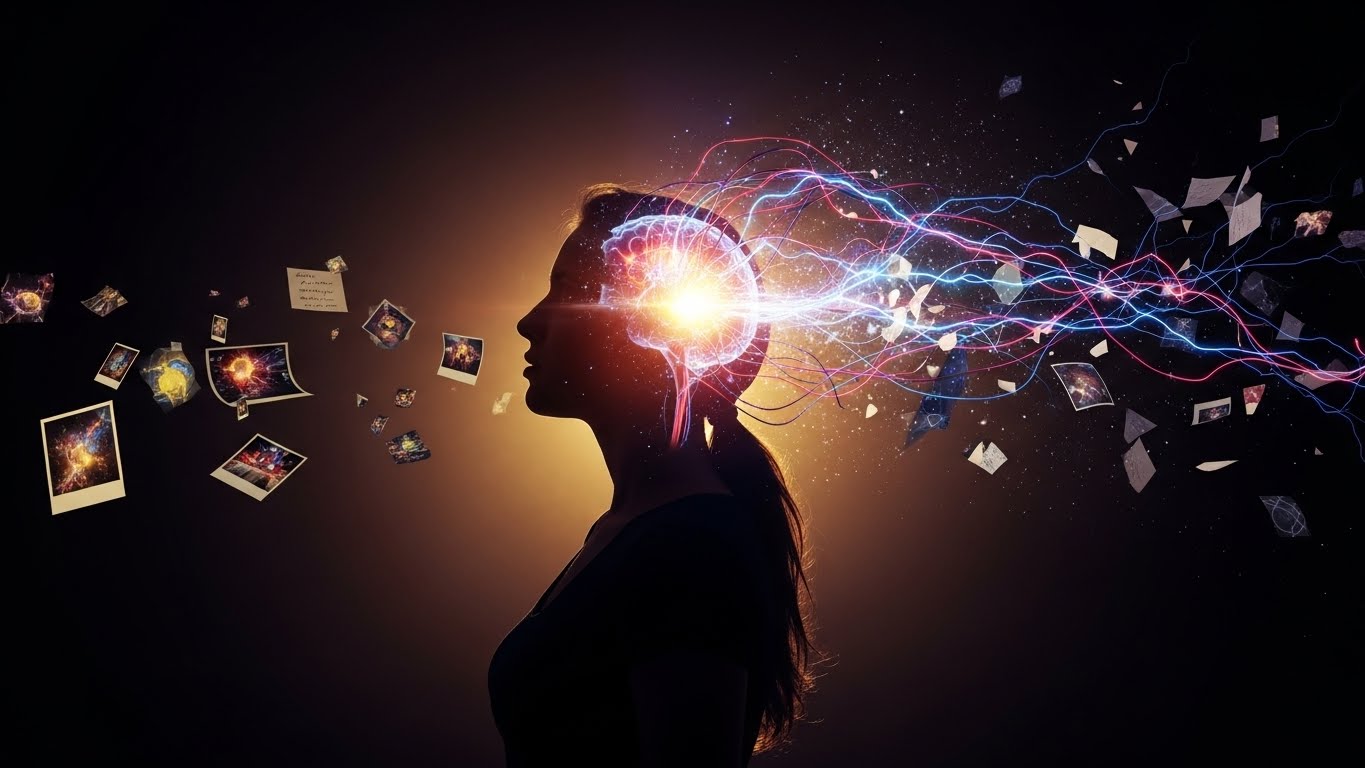

There are moments in life when a feeling hits so hard it steals the breath straight out of your lungs. A breakup is one of those moments. One day you’re stitched into the fabric of someone’s life—their voice familiar, their presence predictable—and the next you’re standing alone with a mind that refuses to quiet down.
People say heartbreak is emotional.
But anyone who’s lived through it knows that it’s also unmistakably physical.
That ache in your chest.
That restless electricity under your skin.
The insomnia that stretches the night wider than it should be.
These aren’t poetic exaggerations. Your brain is reacting to loss exactly the way it reacts to injury, withdrawal, or shock. Love changes the architecture of the mind, and loss rearranges it again—violently, abruptly, without your permission.
To understand why breakups hurt so much, we have to zoom in—not on the relationship, but on the neural machinery that held it together.
How Love Rewires the Brain (And Why Losing It Feels Like Falling Out of Yourself)
If you’ve ever wondered why love feels intoxicating in the best way, it’s because your brain builds an entire reward structure around another person. It doesn’t do this lightly or metaphorically. It does it chemically, electrically, systematically.
Dopamine: The Spark Behind Every Sweet Moment
Every notification from them, every kiss, every shared laugh—the brain logs these moments like tiny promises. Over time, dopamine stops responding to the pleasure itself and begins responding to the anticipation of it.
Suddenly, the person becomes not just someone you care about, but a reliable source of emotional electricity.
Oxytocin: The Bond That Tightens Without You Noticing
Oxytocin isn’t gentle. It’s binding. Intimacy, touch, whispered conversations—your brain soaks them in and converts them into a sense of safety. Lose the person, and that safety collapses.
Serotonin: The Quiet Stability Love Brings
Relationships stabilize mood in ways most of us don’t recognize until that stability shatters.
Over time, the brain begins treating the relationship not as an addition to your life, but as part of your internal scaffolding.
So when it ends, it doesn’t feel like losing a person.
It feels like losing a version of yourself that felt anchored.
What a Breakup Does to the Brain (The Emotional Earthquake Beneath the Surface)
A breakup doesn’t land softly. It detonates.
Your brain reacts to heartbreak the same way it reacts to threat, separation, and sudden shock.
The process looks something like this:
The Amygdala Fires the Alarm
This is the “danger” center of the brain, and heartbreak trips it instantly. The world begins to feel uncertain. Your chest tightens. You feel restless and unsteady, as if something is wrong even when you’re sitting quietly in your room.
Your Prefrontal Cortex—The Rational Part—Goes Foggy
This is why you can’t “logic” your way through heartbreak.
It’s why you know the relationship ended for a reason, yet your mind keeps whispering:
Maybe we could’ve tried harder.
Maybe it wasn’t really over.
Maybe they’ll come back.
The brain that handles decision-making temporarily loses its footing.
Your Nervous System Gets Pulled Into the Fight
Your heart might race. You may tremble. Some people lose their appetite; others feel sick.
This isn’t emotional theatrics—it’s physiology responding to perceived loss.
Your brain doesn’t interpret breakups as events.
It interprets them as threats.
Why Heartbreak Feels Physical (Your Brain Doesn’t Know the Difference)
There’s something haunting about how heartbreak settles into the body.
The heaviness in your chest?
The knot in your stomach?
The sensation that your whole body is grieving?
Researchers discovered that emotional and physical pain overlap in the brain. Specifically, heartbreak activates the dorsal anterior cingulate cortex (dACC)—the same region triggered when you sprain an ankle or cut your hand.
Your brain’s language for pain is universal.
It doesn’t distinguish between a wound on your skin and a wound in your story.
That’s why breakups don’t just break your heart—they bruise your entire sense of being.
Some studies even show that over-the-counter pain relievers slightly reduce emotional hurt.
Not because they mend the relationship.
But because they momentarily quiet the part of the brain that interprets suffering.
Dopamine Withdrawal: The Hidden Addiction Behind Missing Your Ex
You’re not imagining the craving. You’re not exaggerating the intensity.
You’re experiencing withdrawal.
When a relationship ends, the brain loses a steady source of dopamine and tries desperately to restore it. That’s why you:
- revisit old messages
- stalk their social media
- replay memories
- feel an ache when your phone lights up
- hope for a text you know won’t come
Your brain isn’t craving them.
It’s craving the chemical stability they represented.
This is why “just move on” feels impossible.
You’re not fighting willpower—you’re fighting biology.
Cortisol and Emotional Chaos: Why Everything Feels Worse at Night
Breakups unleash cortisol, the stress hormone that makes your thoughts race and your chest tighten. Cortisol doesn’t just appear—it cascades.
And at night, when the world goes quiet and distraction fades, your mind becomes a magnifying glass.
Every emotion intensifies.
Every memory sharpens.
Every unanswered question grows teeth.
This is why heartbreak feels heavier after midnight.
Your brain is trying to process pain at the hour it feels least able to handle it.
Attachment Systems: The Primitive Reason Losing Someone Hurts So Deeply
Long before modern dating apps and late-night overthinking, attachment was a matter of survival. Your brain is still wired for connection in a way that predates language.
Breakups activate this ancient circuitry.
If you’re securely attached:
You feel destabilized, like your internal rhythm has been disrupted.
If you’re anxiously attached:
You feel abandoned, rejected, and terrified of losing love.
If you’re avoidant:
You feel numb at first—until the emotional crash hits later.
Regardless of your style, the brain interprets separation as a loss of safety.
Your partner wasn’t just someone you loved—they were a familiar pattern your nervous system learned to rely on.
Losing them feels like losing home.
Why Your Mind Replays Memories You’re Trying to Forget
There’s a specific cruelty to heartbreak: the mind keeps pulling you back to the very moments you’re trying to escape.
This is rumination—a cognitive loop where the brain replays emotionally charged memories in an attempt to “solve” the pain.
But the brain doesn’t solve heartbreak this way.
It deepens it.
It idealizes the good moments.
It distorts the neutral ones.
It edits out the painful parts entirely.
This is how you end up longing for someone who also hurt you.
Not because the hurt wasn’t real, but because the brain clings to the sugar while trying to forget the knife.
How to Help Your Brain Heal (Evidence-Based Ways to Recover)
Recovery isn’t about pretending you’re fine. It’s about guiding your brain out of the alarm state and back into equilibrium.
Here are the tools neuroscience and psychology consider most effective:
Grounding Techniques
Deep breathing, sensory resets, cold exposure—anything that brings your attention back to your body and out of the mental storm.
Truth-Based Reframing
Writing down the real story of the relationship, not the edited highlight reel.
This helps correct idealization loops.
Replacement Reward Habits
Small actions—like exercising, cleaning, journaling—create microbursts of dopamine that begin rebuilding your emotional architecture.
Connection
Your nervous system calms in the presence of other humans.
Isolation amplifies heartbreak; contact softens it.
Routine and Identity Reconstruction
New habits don’t just fill time.
They retrain your brain to associate safety with your own future instead of your past.
Internal link enhancements:
- How to Stop Thinking About Your Ex Instantly
- How to Get Over a Breakup Fast
- Why Breakups Hurt: The Neuroscience of Heartbreak
- Signs You’re Healing Faster Than You Think
- How to Rebuild Confidence After a Breakup
These reinforce topical authority while giving readers pathways that feel natural to the emotional journey.
Questions People Whisper to Themselves After a Breakup
Why does losing someone hurt everywhere—not just emotionally, but physically?
Because the brain uses the same pain circuitry for emotional wounds as physical ones. Your heartbreak is traveling through the same channels that register injury.
Why do I feel addicted to someone who’s no longer in my life?
You’re not addicted to them—you’re experiencing dopamine withdrawal from the reward system your brain built around the relationship.
Why can’t I sleep without feeling overwhelmed?
Nighttime removes distraction and raises cortisol, making emotional pain echo louder through your mind.
Why do I keep idealizing the relationship when I know it wasn’t perfect?
Memory is biased toward emotional highs. Heartbreak activates the fantasy bond, which paints the past in softer colors than it deserves.
Does everyone feel heartbreak this intensely, or is something wrong with me?
Heartbreak affects every human brain the same way. Nothing about your reaction is “too much.” It’s biology, not weakness.