

There’s a strange moment in heartbreak when your mind becomes both too loud and too quiet at once. You wake up in the morning hoping today will be different—lighter, clearer, less haunted—yet the moment you’re fully awake, there they are again. Your ex. Not in front of you, not in your life, but somehow still occupying the sharpest corners of your thoughts.
You tell yourself to stop. You try distracting yourself. You try to reason with the ache.
But your brain keeps drifting back to the same person you’re trying so hard to let go of.
This tug-of-war isn't proof of weakness or an inability to move on. It’s simply how the human mind responds to loss, routine disruption, emotional withdrawal, and the collapse of a story you once believed in. If anything, your difficulty in stopping these thoughts means your brain is functioning exactly as it was designed to—even if its design feels torturous right now.
What you need is not willpower.
What you need is interruption—swift, grounded, psychology-backed techniques that cut through the mental noise and restore command over your internal world.
Let’s begin with the truth behind why your thoughts keep circling back to your ex.
Why Your Mind Keeps Returning to Your Ex (Even When You’re Exhausted by It)

Your brain doesn’t understand “breakup”—not in the logical way you do. To the mind, a breakup looks like sudden loss of routine, emotional safety, and dopamine regulation. It feels like the absence of something it once relied on.
That’s why you have moments where you feel physically pulled toward memories. Why you revisit texts you swore you’d delete. Why you find yourself staring at the ceiling at 2 a.m. wondering how someone can be so present in your head after becoming so absent in your life.
Three internal mechanisms keep looping you back:
Dopamine Withdrawal
Your ex wasn’t merely a person—they were a source of emotional chemistry. Affection, validation, intimacy… all of these gave your brain predictable dopamine hits. Remove the person, and the chemical circuits panic.
Attachment System Activation
Your attachment system doesn’t deal in logic. It recognizes closeness, separation, and threat. When someone disappears from the daily rhythm of your life, your brain misreads it as danger and tries to pull them back into focus.
Rumination Cycles
Thoughts don’t just appear—they repeat. The more you revisit an ex, the more deeply your brain grooves that loop, convincing itself that repetition equals resolution.
But repetition only strengthens fixation.
The good news?
Because these loops are biological, they can be interrupted—instantly—through a handful of strategic methods used in cognitive science and trauma-informed emotional therapy.
Here’s how to take your mind back.
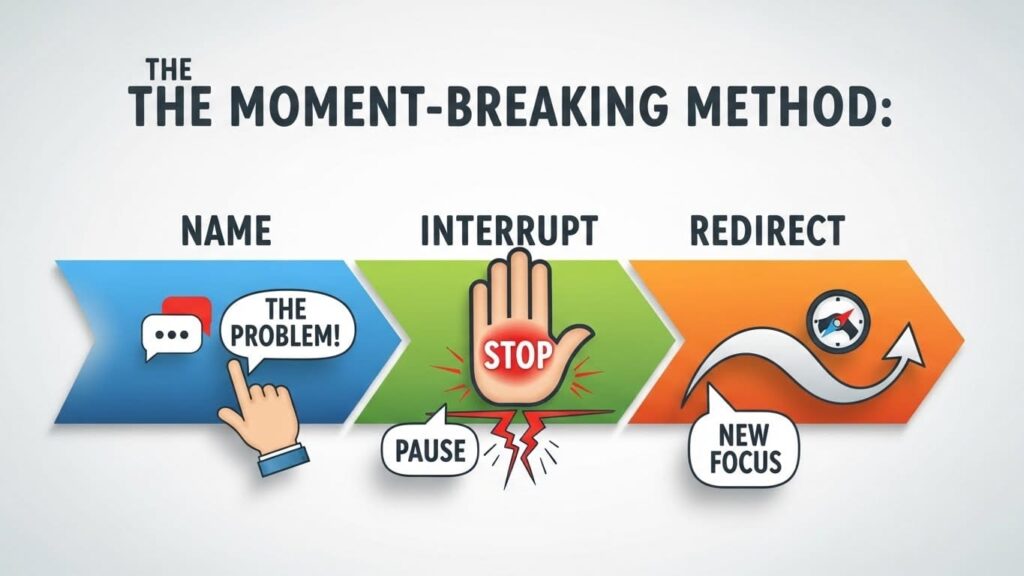
1. The Moment-Breaking Method: Name → Interrupt → Redirect

The first trick is deceptively simple, almost too simple—until you see how quickly it snaps your mind out of a runaway thought.
The moment you catch yourself thinking about your ex, pause.
Not dramatically. Just enough to observe what your mind is doing.
Say to yourself—quietly, truthfully:
“I’m thinking about my ex right now.”
Naming the thought pulls it out of the emotional fog and into conscious awareness. Now you’re no longer in the thought—you’re watching it.
Immediately after, break the loop with a physical action: stand, stretch, clap your hands, turn your head sharply, exhale hard. Your brain loses its grip when the body abruptly changes state.
Then redirect. Do something small and immediate: refill your water, step outside, change rooms, open a new tab, turn on a song.
Thought loops cannot survive disruption.
2. The Sensory Grounding Reset (Pull Your Mind Back Into Your Body)
There’s something eerie about how heartbreak lives in both memory and sensation. The mind spins; the body tenses. One fuels the other.
Grounding interrupts this connection by yanking your awareness back into the present moment.
Use the 5-4-3-2-1 method:
- Five things you can see
- Four you can touch
- Three you can hear
- Two you can smell
- One you can taste
As you name each sensation, your brain switches from rumination to orientation.
You cannot spiral while anchoring yourself to the room you’re standing in.
3. The Trigger Detox: Removing the Invisible Cues Keeping You Stuck

People don't realize how many tiny reminders keep pulling them back into the emotional gravity field of their ex.
One song. One photo. One saved location.
It’s enough to reopen the whole story.
Do yourself the kindness of clearing the emotional minefield:
- Mute or block their social media
- Archive chats that feel too raw to revisit
- Change your lockscreen
- Remove or store physical objects tied to memories
- Skip songs that punch you emotionally in the throat
This isn’t being dramatic.
This is building a world you can heal inside.
Internal link suggestion: This step pairs perfectly with deeper strategies from “How to Get Over a Breakup Fast,” which expands on emotional detoxing and trigger removal.
4. The Reality Filter That Breaks Idealization

Heartbreak has a habit of editing memories, polishing moments, amplifying sweetness, and muting the parts that hurt. This is your brain trying to soothe itself—but it backfires.
When you catch yourself romanticizing your ex, pause and ask:
- What didn’t work, even when things were good?
- Where did I shrink myself?
- What needs of mine went unmet?
- What patterns would have eventually hurt me more?
This isn’t bitterness.
It’s clarity—your most underrated healing tool.
5. The Anti-Rumination Script (Borrowed From Cognitive Behavioral Therapy)
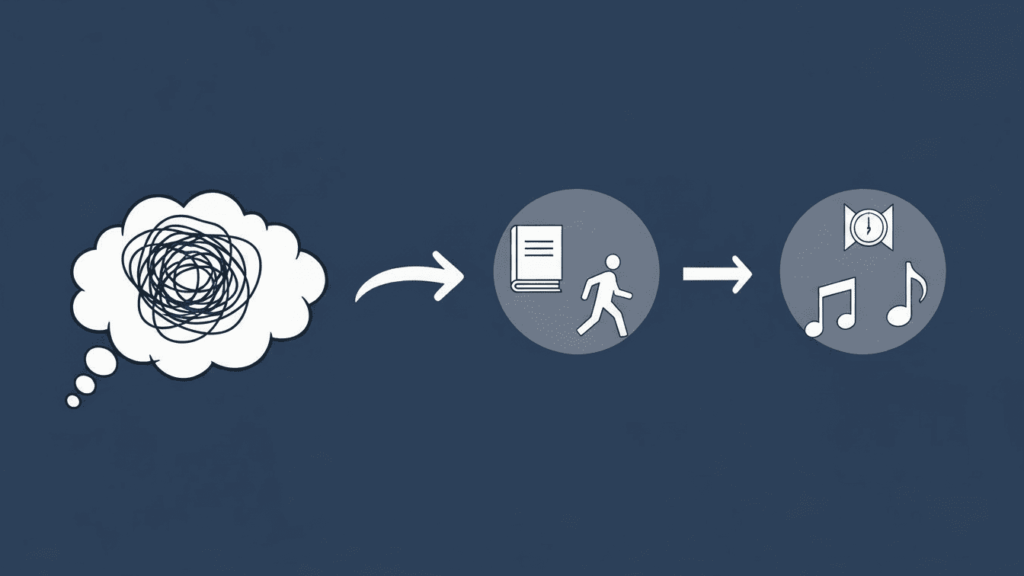
When thoughts begin to spiral, try whispering to yourself:
“This thought isn’t dangerous.
It’s uncomfortable—and it will pass.”
This tiny phrase does something profound:
It removes urgency. It removes panic. It removes the idea that a thought must be acted upon, solved, or analyzed.
Thoughts are not commands.
They are weather.
6. The Cold Shift: A Physical Reset for Emotional Overload

If a thought about your ex grabs hold with that crushing tightness—the kind that makes your chest ache—don’t fight it with logic.
Use temperature.
Splash cold water on your face.
Hold an ice cube.
Let cold air hit your skin.
This activates your vagus nerve and interrupts emotional overload faster than almost any mental strategy.
Your body remembers peace even when your mind forgets.
7. The Micro-Task Momentum Trick

When your ex hijacks your attention, you may feel stuck—paralyzed by the weight of a thought. Moving even slightly can break the freeze.
Pick a micro-task:
- Fold one piece of clothing
- Send one message
- Drink a glass of water
- Step outside
- Clear a single item from your space
The point isn’t productivity.
It’s dopamine—tiny sparks of accomplishment that override emotional cravings and redirect your focus.
8. The Social Reconnection Cue

Isolation is heartbreak’s amplifier.
Your thoughts get louder when no other voices exist to challenge them.
You don’t need a long conversation—just a gentle reconnection with humanity:
- Text a friend
- Sit in a café
- Make eye contact with someone kind
- Call someone you trust
Your nervous system calms in the presence of others.
Connection softens obsession.
Internal link suggestion: A deeper guide on emotional rewiring is found in “Why Breakups Hurt: The Neuroscience of Heartbreak,” which explains how social interaction accelerates healing.
9. The Future-Self Shift (Reclaim Your Mind by Rewriting What Comes Next)

If thoughts of your ex keep pulling you backward, create something stronger pulling you forward.
Close your eyes and imagine yourself six months from now:
Different posture.
Different energy.
Different confidence.
Different peace.
Picture the meals you’ll cook, the places you’ll wander through, the new habits layered into your life.
Picture a version of you who survived this—not perfectly, but fully.
Your future self becomes a magnet.
Your past loses its pull.
Internal link suggestion: For rebuilding confidence, see “Signs You’re Healing Faster Than You Think” and “How to Rebuild Confidence After a Breakup.”
The Questions You’re Probably Asking Yourself Right Now

Why does my brain keep going back to my ex even when I don’t want it to?
Because heartbreak rewires your emotional pathways. Your brain is trying to stabilize itself through familiarity, not logic. This is withdrawal, not failure.
Will no-contact really help stop the thoughts?
It’s one of the most reliable ways to weaken memory triggers. Distance is the oxygen your healing needs—even if your heart resists the idea at first.
Is it normal to think about them months later?
Completely. Neural patterns take time to unwind. With interruption techniques, the frequency and intensity drop quickly.
How do I stop myself from checking their social media?
Remove the option. Mute, block, restrict. Temptation fades when access disappears.
Can I really stop thinking about them instantly?
Yes—if you interrupt the thought the moment you notice it. Long-term healing takes time, but instant disruption is absolutely possible.